Servery Window Ideas for Alfresco Entertaining
A single well-placed servery window can completely transform how you use your home on a warm Saturday afternoon. If you’ve ever stood in the kitchen passing drinks through a sliding door while your guests are outside on the deck, you already know exactly what’s missing.
- Which Servery Window Style Is Right for Your Home?
- Best Servery Window Ideas for a Bifold Design
- Which Glass Type Should You Choose?
- Common Servery Window Mistakes to Avoid
- DIY vs Hiring a Professional Installer
- What to Ask Any Window Supplier Before You Commit
- How a Professional Servery Window Install Works
- Servery Window Ideas from a Local Macarthur Specialist
- FAQ
Which Servery Window Style Is Right for Your Home?
A servery window is an opening cut through a kitchen or bar wall that allows food, drinks, and conversation to flow freely between indoor and outdoor spaces. Unlike a door, it takes up no floor space. Unlike a standard window, it’s sized and positioned to function as a bench-height pass-through. The result is an indoor-outdoor connection that feels natural instead of forced.
In the Macarthur region, where summers are hot and outdoor living matters, servery windows have become one of the most requested kitchen additions during renovations. More families are choosing to improve and upgrade their existing homes rather than move, and a servery window is one of the highest-value upgrades you can add to a kitchen that backs onto an alfresco or deck.
The style you choose determines how wide the opening can be, how much clearance you need, and what the finished product feels like to use day-to-day. Here’s a practical comparison of the most popular options.
| Style | Max Opening | Best For | Trade-off |
|---|---|---|---|
| Bifold | Full wall width | Wide alfresco openings | Panels need side stacking room |
| Sliding | Up to about 50% of frame | Narrower walls, tighter budgets | Never fully open |
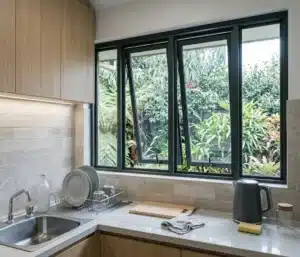
| Awning | Full frame width | Ventilation in light rain | Limited pass-through height |
| Fixed with Flyscreen | No opening | Light and views only | No practical pass-through |
| Stacker | Up to 80% of frame | Wide openings without fold room | Panels stack to one side |
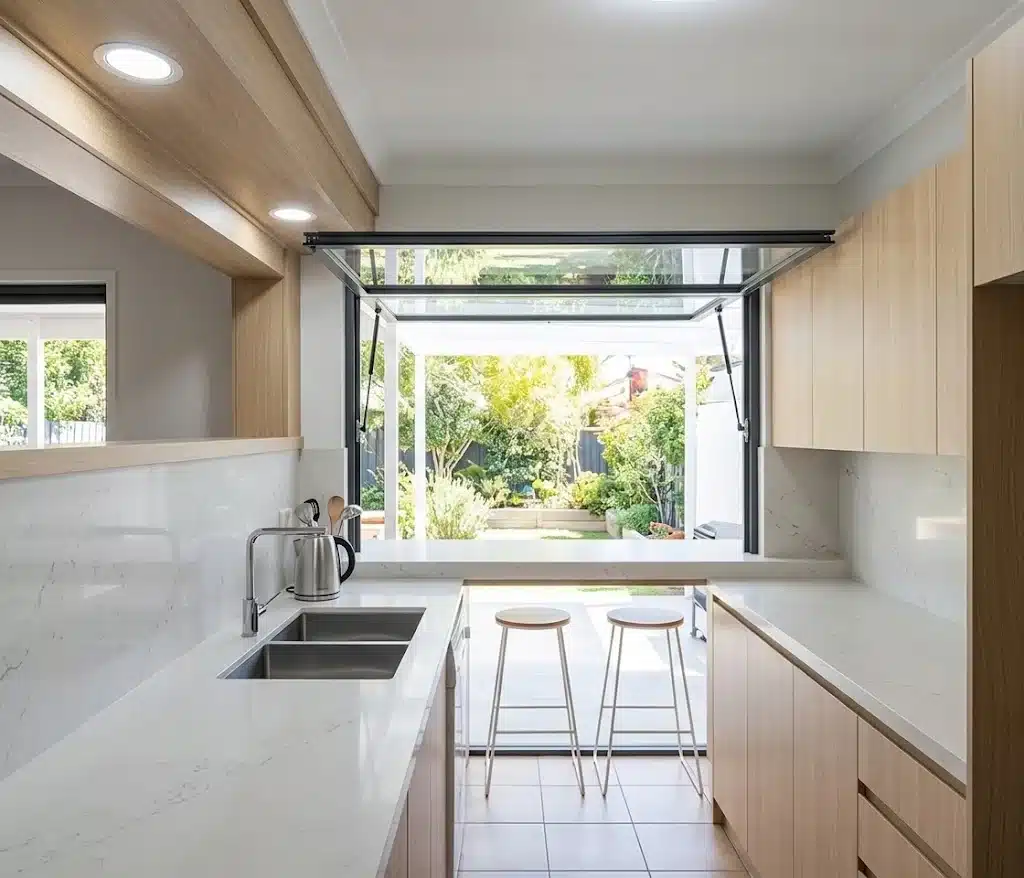
For most alfresco entertaining, homeowners in Campbelltown favour bifold windows because they fold fully back against the wall and effectively erase the barrier between kitchen and outdoor space. A 2.4-metre bifold servery, for example, can open to almost nothing, letting guests lean on the bench from outside and making the kitchen feel like a proper bar. That full-open feeling is hard to replicate with any other style.
Best Servery Window Ideas for a Bifold Design
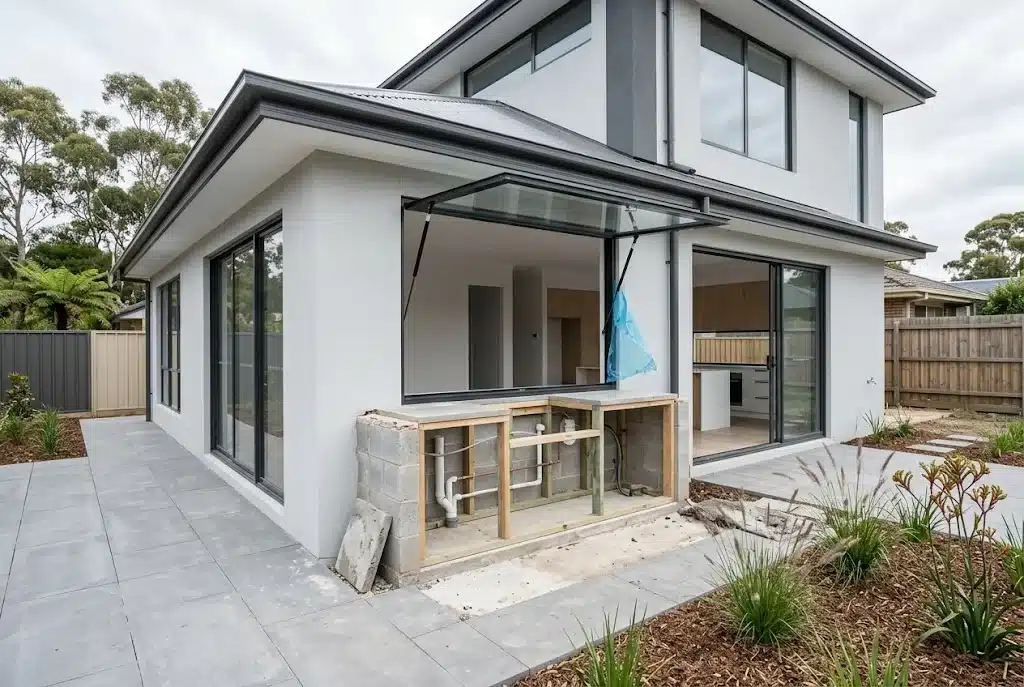
Bifold windows are the most flexible and visually impressive option for a servery opening. They come with more design choices than most people expect. Here are the ideas that work best in Australian outdoor entertaining spaces.
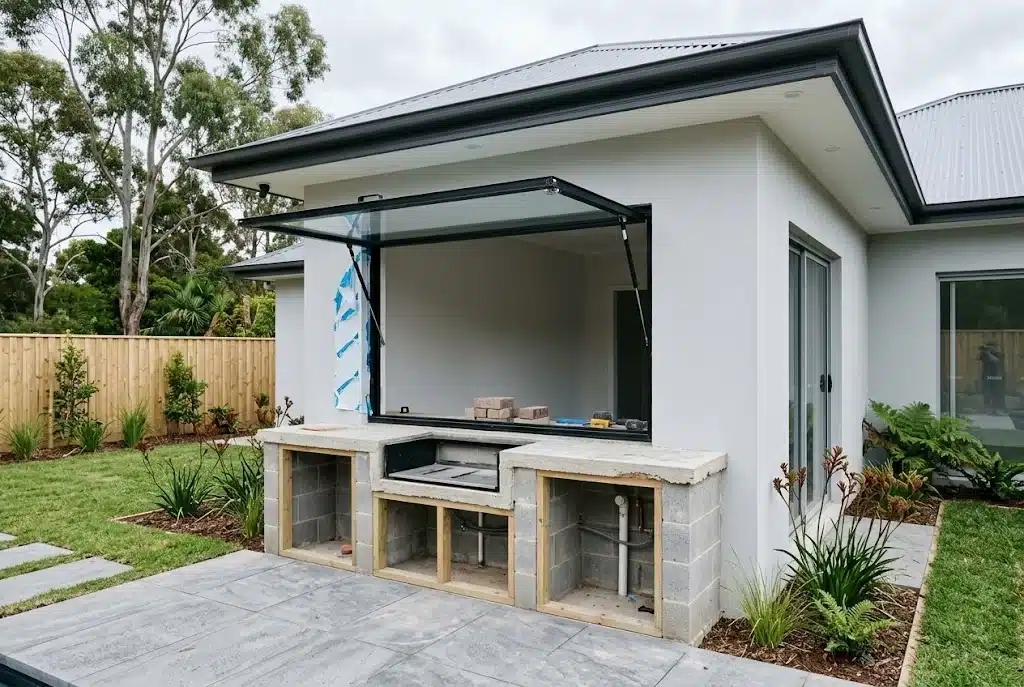
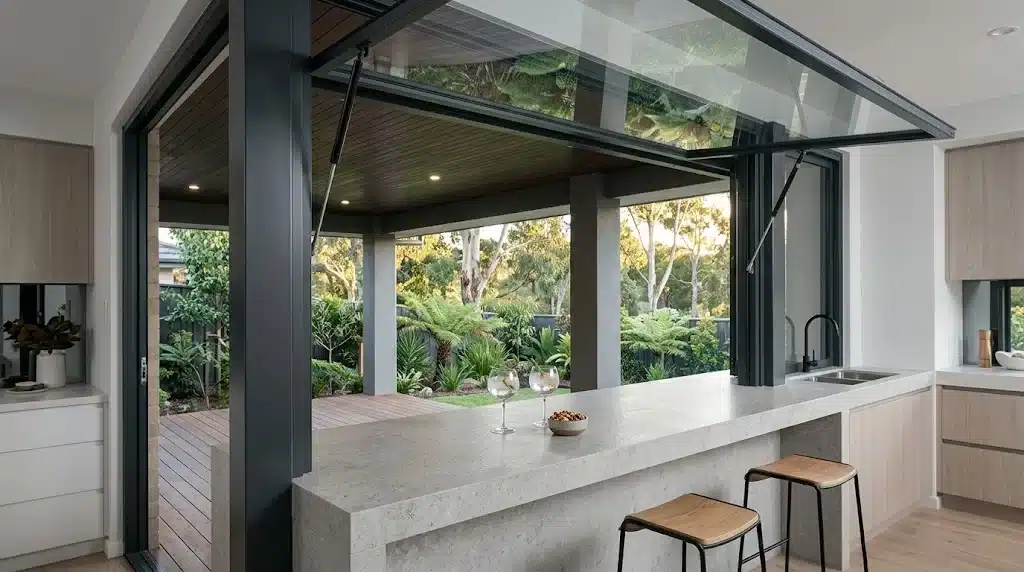
Bench-height sill with a timber ledge. Position the bottom of the bifold frame at bench height, typically around 900mm from floor level. Cap it with a timber or stone ledge that runs continuously from inside to outside. This creates a natural bar surface perfect for drinks, platters, and guests leaning in from the alfresco side.
Fly screen integration. A built-in retractable flyscreen lets you leave the bifold open on warm evenings without inviting every insect in the Macarthur region into your kitchen. Ask your supplier whether the screen retracts into the frame or sits in a separate channel.
Low-profile sill track. A flush or recessed bottom track makes the opening easier to use and reduces trip hazards when the window is open. It also looks considerably cleaner than a raised track.
Powder-coat colour matching. Aluminium frames can be powder coated in almost any colour to match your kitchen cabinetry, outdoor furniture, or the rest of your home’s windows. Charcoal, dune, and monument tones are particularly popular in Macarthur-area new builds and renovations right now.
Which Glass Type Should You Choose?
The glass you specify affects safety, comfort, and cost more than almost any other single decision. Under the National Construction Code, toughened safety glass is generally required for glazing in areas where human impact is likely, including bench-height servery openings. Beyond that mandatory baseline, here’s what your other options mean in practical terms.
| Glass Type | What It Does | Best Use Case |
|---|---|---|
| Toughened | Shatters safely into small pieces | All servery openings (standard) |
| Laminated | Holds together if broken | Overhead or high-security areas |
| Low-E | Reflects heat, reduces UV | North or west-facing openings |
| Double Glazed | Two panes with sealed air gap | Year-round comfort, noise control |
| Tinted | Reduces glare and solar heat gain | Sunny alfresco aspects |
Double glazing, which is two panes of glass separated by a sealed air gap that slows heat transfer and reduces outside noise, is worth considering if your kitchen faces west or if you entertain through the cooler months. The Australian Government’s Your Home guide notes that well-chosen glazing is one of the most effective ways to manage thermal performance. That said, double glazing adds cost, and for a servery that’s open for half the day anyway, single toughened or Low-E glass is often the smarter choice. A good installer will help you weigh that honestly.
Common Servery Window Mistakes to Avoid
Even a well-intentioned renovation can go sideways when planning misses a few key details. Here are the mistakes that come up most often and how to sidestep them.
- Wrong sill height: A servery set too high or too low makes the pass-through awkward. Standard Australian kitchen bench height is 900mm; your servery sill should sit at or very close to that on the indoor side.
- Not checking for structural elements: The wall you want to open may contain load-bearing framing, plumbing, or electrical wiring. This is one of the most important reasons to get a professional assessment before any cutting.
- Forgetting weather protection: A servery facing south or west without an eave or pergola above it will let rain into your kitchen. Check your roof line and plan an appropriate overhang before finalising the opening.
- Undersizing the opening: People often play it safe and go smaller than needed. If you’re spending the money, go as wide as the wall allows. You will use every centimetre.
- Skipping the flyscreen: It seems small until the first warm evening with the window open. Budget for a screen from the start rather than retrofitting later.
- Not considering council or BASIX requirements: Depending on your renovation scope and property location, a BASIX certificate or development consent may be required. Requirements vary by council and project type, so check with your local council or ask your installer about typical requirements for your area.
DIY vs Hiring a Professional Installer
A servery window project involves cutting an opening through an external wall, which almost always means dealing with structural framing, weatherproofing, and often electrical or plumbing lines behind the wall. This is not a weekend DIY job, even for confident home renovators.
Custom-made aluminium bifold windows need to be fabricated to exact measurements. A millimetre out, and the panels won’t fold and track correctly. The installation requires the right flashing, sill drainage, and sealing to keep water out long-term. Done wrong, water ingress behind the frame causes timber rot, mould, and costly repairs that far outweigh any money saved upfront.
There’s also the compliance side. Under NSW Fair Trading licensing rules, structural building work and licensed trades like electrical and plumbing must be carried out by appropriately licensed contractors. If you plan to sell your home, non-compliant work can create real problems at conveyancing.
The honest answer: you can absolutely manage the project as an owner-builder, but the fabrication and installation of the window unit itself should be left to a licensed and insured professional. That’s where you protect your investment, your warranty, and your resale value.
What to Ask Any Window Supplier Before You Commit
Choosing the right supplier matters as much as choosing the right style. Here are the questions worth asking before you sign anything.
- Do you manufacture in-house? Or is fabrication outsourced?
- What aluminium system do you use? Better-quality systems have tighter tolerances and better long-term track performance.
- What glass options do you offer? A good supplier offers toughened, laminated, Low-E, double glazed, tinted, and obscure as standard.
- What powder-coat colours are available? And is custom colour matching an option?
- Are you fully licensed and insured? Ask to see the licence number and verify it at NSW Fair Trading.
- What is the typical lead time from measure to install? Custom aluminium windows commonly run a few weeks from confirmed measure to installation, depending on the job and workshop load.
- Do you handle the full project? Including the structural opening, waterproofing, and any required carpentry?
How a Professional Servery Window Install Works
Understanding the process helps you plan your renovation timeline and know what to expect at each stage. Here’s what a typical professionally managed servery window project looks like from start to finish.
Servery Window Ideas from a Local Macarthur Specialist
For Campbelltown homeowners and those in surrounding suburbs like Ingleburn and Gregory Hills, the team that handles this work locally is Newage Glass and Aluminium. Based at Unit 2/16 Blackmore Road in the Smeaton Grange Industrial Estate, just off Camden Valley Way and minutes from Narellan Town Centre, Newage is a family-run glass and aluminium specialist in business since 2009. With more than 2,500 completed projects and a 4.9-star Google rating, they bring genuine local knowledge to every measure and quote.
The team manufactures everything in-house at the Smeaton Grange workshop and installs with their own crew. There’s no outsourcing or finger-pointing between trades if something needs adjusting. They’re fully licensed and insured, and they offer a full range of powder-coat colours alongside glass choices including toughened, laminated, Low-E, double glazed, tinted, and obscure.
Whether your home sits close to Queen Street in Campbelltown or further out along the Hume Highway corridor, the free measure and quote covers your entire project from first visit to finished installation. Newage also supplies and installs across nearby communities including Leumeah, Glen Alpine, Ambarvale, Minto, and Ingleburn, all from the one Smeaton Grange workshop.
If you’re planning a servery window for your alfresco and want honest advice from a team that works in your neighbourhood every day, book your free measure and quote with Newage Glass and Aluminium. Open Monday to Friday 8am to 5pm and Saturday 8am to 1pm, they’re ready to help you create the outdoor entertaining setup you’ve been planning.