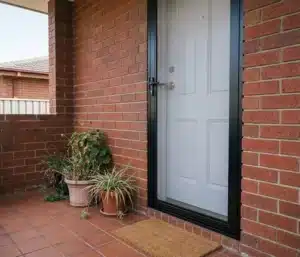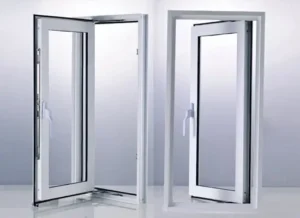

Walk the streets off Amethyst Place or along Epping Forest Drive on a January afternoon and you can feel why Eagle Vale homes struggle in summer. Many of the brick veneer and project homes in this part of Eagle Vale went up in the 1980s and 1990s with single glazed windows, light frames and very little thought given to which way the glass faced. The result is bedrooms and living rooms near Thomas Clarkson Reserve that hold heat long after the sun has gone down.
Key takeaways
- Orientation matters more than window size: west facing glass in Eagle Vale does the most damage on summer afternoons.
- NatHERS, the national home energy rating scheme, treats window area, glass type and orientation as major drivers of a home’s cooling load.
- Awning and louvre windows can stay open during a southerly change to flush heat out, while sliding windows give wide clear views with a simpler build.
- Double glazing or low E glass cuts heat gain through the glass; a thermally improved frame helps further but the glass does most of the work.
- Replacing like for like in the same opening rarely needs council approval, but larger openings or bushfire and fire rated situations can, and Newage advises on this at the measure.
Why does summer heat hit Eagle Vale homes so hard?
Eagle Vale sits well inland, and the Bureau of Meteorology consistently records hotter summer days in western and south western Sydney than along the coast, often by several degrees. Add a 1980s or 1990s brick veneer home with single glazing and the house simply has nowhere to put that heat.
Many homes in this part of Eagle Vale, around Gidley Crescent and Dalwood Place, were built on sloping blocks with the living areas opening to the backyard. Where that backyard faces west, the afternoon sun comes straight through the glass at a low angle, and eaves that are fine at midday offer almost no protection at 4pm.
The frames on those original windows are usually a thin section with no thermal break, which means the aluminium itself conducts heat into the room. The glass, though, is the main path. A single pane of clear glass does very little to slow radiant heat, so the room warms up as fast as the sun can deliver it.
Which window styles give you the most control over heat?
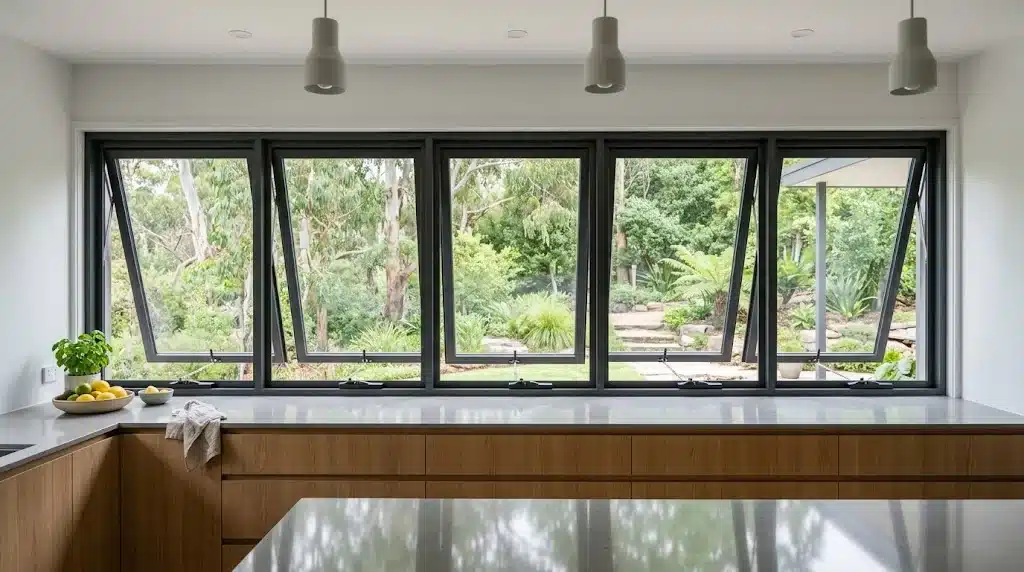
Styles that let you open the home up in the evening while keeping it sealed in the afternoon do best. In practice that means a mix: awning or louvre windows for airflow in bedrooms, and larger fixed or sliding panels in living areas where the view matters.
The table below shows how the main styles Newage makes in Smeaton Grange compare for a hot western Sydney summer.
| Window style | Heat control when closed | Ventilation when open | Suits |
|---|---|---|---|
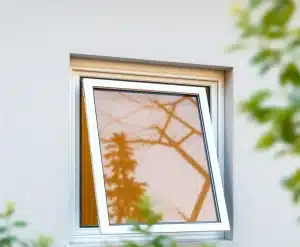
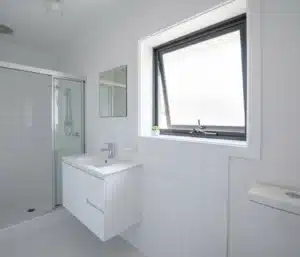
| Awning | Very good seal, compresses onto the frame | Can stay open in light rain and catch a breeze | Bedrooms, bathrooms, high openings |
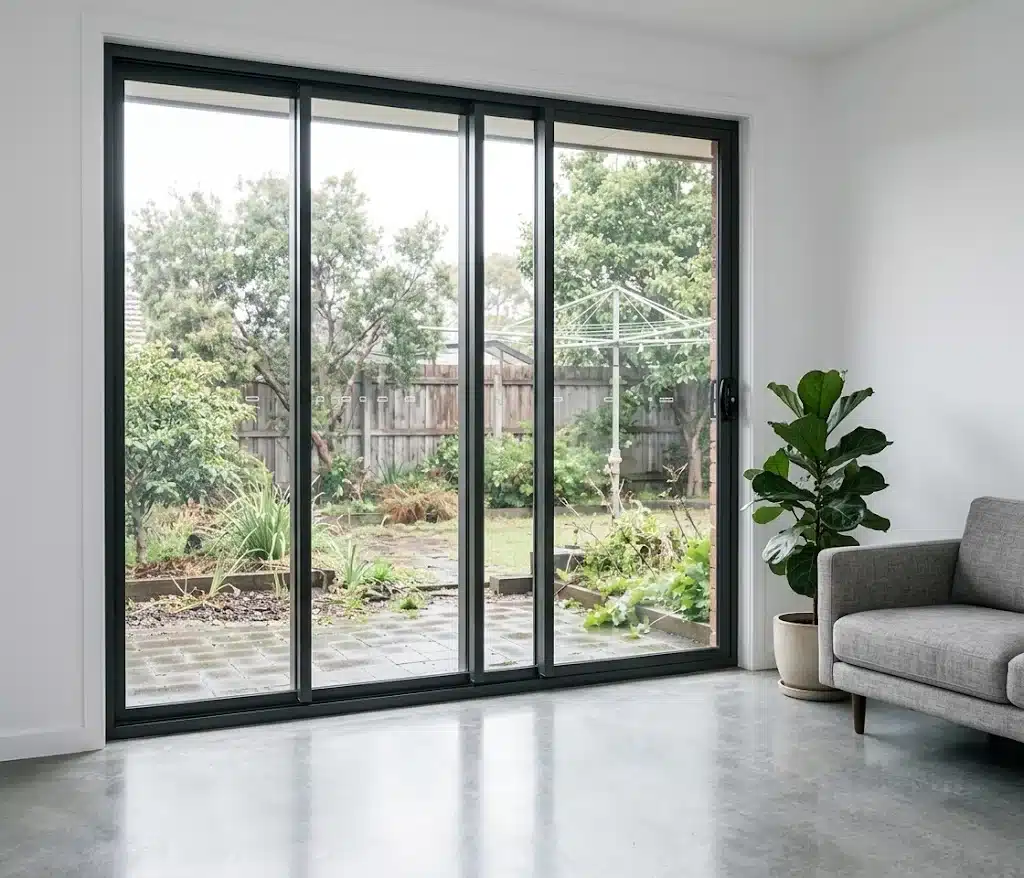
| Sliding | Good with double glazing, relies on brush seals | Half the opening clears | Living rooms, wide openings, simple operation |
| Louvre | Fair; many blades mean more joins | Almost the whole opening clears, ideal for night purging | Hallways, stairwells, alfresco walls |
| Fixed | Best seal of all, no moving parts | None, pair with an opening window | Picture windows, feature glass |
A common approach for a west facing living room is a large fixed panel with a pair of awning windows either side. You keep the view, seal it tight through the afternoon, then open the awnings once the southerly arrives.
Newage measures every opening in your Eagle Vale home and recommends a style and glass for each side of the house. Call 0408 585 846 for a free on site measure.
Does the glass matter more than the frame?
Yes. For summer heat the glass does most of the work, and the frame comes second. New aluminium windows fitted with clear single glazing will look better and seal better than the originals, but they will not change how much radiant heat comes through.
Two upgrades make the difference. Double glazed windows put a sealed air gap between two panes, which slows conducted heat and also helps with noise from Eagle Vale Drive. Low E glass adds a microscopically thin coating that reflects a large part of the sun’s heat while still letting light through, and it can be used on its own or inside a double glazed unit.
On the frame side, Newage can build aluminium windows made to measure in Smeaton Grange in a heavier section that holds thicker glass and seals more firmly.
What about the west facing rooms in older brick veneer homes?
Treat them first and treat them differently. In many homes in this part of Eagle Vale, the main bedroom or the family room ends up on the western wall, and that is where the biggest gains sit.
Brick veneer homes of this era usually have standard sized openings and a timber reveal behind the aluminium, which makes a straight swap into the same opening fairly clean. The trick is choosing a glass that handles the direct afternoon sun, then adding external shading where the eaves fall short. A window that is shaded on the outside gains far less heat than one with blinds on the inside, because the heat is stopped before it reaches the glass.
North facing windows are a different story. In winter you want that sun, so a lighter touch, often clear double glazing without a heavy heat reflecting coating, keeps the room comfortable across the year. This is why a whole home window upgrade works best when each side of the house is specified on its own.
Do new windows in Eagle Vale need council approval?
Often not, but it depends on what changes. In NSW, replacing a window with a new one of the same size in the same opening is generally treated as minor work that does not need a development application, provided the new window meets the relevant building standards.
Approval or certifier sign off comes into play when the opening is enlarged, a new opening is cut, the home sits in a bushfire prone or heritage area, or the window forms part of a wall that has a fire separation role, such as one close to a boundary. Energy requirements under BASIX also apply when the windows are part of a larger renovation or an addition.
Newage has been through this many times since 2009, and the team will tell you at the free measure whether the job you have in mind is a straight swap or something that needs a certifier involved. You can read more about how the business works on the About Newage page.
Every window is built to measure in the Smeaton Grange workshop and installed by the Newage team. Ask for a written quote with glass options listed for each room.
How does a window upgrade for summer heat actually happen?
From first call to the last bead of sealant, the process is simple and most single storey homes are done in a day or two on site. Here is how it usually runs.
- Walk the house Note which rooms are unbearable in the afternoon and which are fine, because that tells you where the money should go.
- Free on site measure A Newage measurer checks each opening, the reveals, the eaves and the sun angle, and talks through glass and style options for every elevation.
- Written quote You receive a written quote that lists each window, its size, style, glass and colour, with nothing left to assumption.
- Manufacture in Smeaton Grange The windows are made to measure in the Newage workshop at Unit 2/16 Blackmore Rd, about 5 km from Eagle Vale.
- Install by the Newage team The same company that made the windows fits them, seals them and leaves the openings finished.
What homeowners near Thomas Clarkson Reserve usually run into
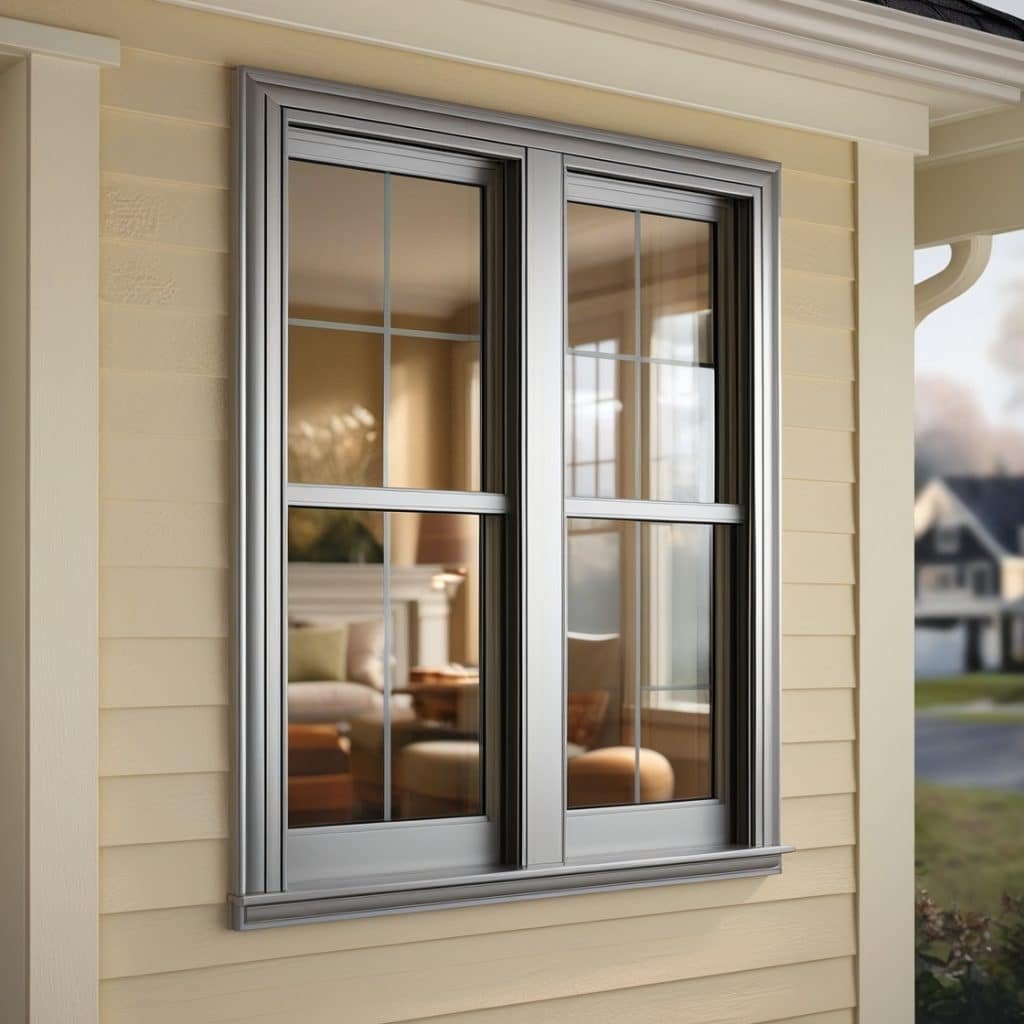
Installers working on homes around Thomas Clarkson Reserve and Eagle Vale High School tend to see the same handful of things. The first is original aluminium windows in a bronze or natural anodised finish that have lost their seals, so the rooms are hot in summer, draughty in winter and noisy whenever the wind picks up.
The second is that the openings in these brick veneer homes are mostly standard sizes, which keeps the job straightforward, but the timber reveals behind the frame have sometimes moved or been painted over many times. A good measurer allows for that so the new window sits plumb and the architraves go back on cleanly.
The third is shading. Many homes in this part of Eagle Vale have had a pergola, carport or extension added at the back over the years, and those additions often change which windows get sun and which do not. What was a shaded window in 1990 might now be fully exposed because a tree came out, or fully shaded because an alfresco roof went on. The glass choice should follow the home as it is today.
Finally, homeowners near Claymore Shopping Centre and Mary Immaculate Catholic Primary School often ask about combining the heat upgrade with a security screen or a change of colour. Both are easy to fold into the same job, and doing them together means one measure, one install and a consistent finish across the whole street facing side of the house.
Planning new windows for your Eagle Vale home?
Newage Glass and Aluminium has made and installed windows and doors across Sydney and surrounding regions since 2009, with more than 2,500 projects completed and a 4.7 star rating on Google. The Smeaton Grange workshop is about 5 km from Eagle Vale, and the same team that builds your residential aluminium windows in the Smeaton Grange workshop is the team that fits them.
Newage already works across Gregory Hills and the surrounding Macarthur suburbs, so an Eagle Vale measure is a short drive. Call 0408 585 846, Monday to Friday 8am to 5pm or Saturday 8am to 1pm, to book a free on site measure and written quote before the next heatwave arrives.
Newage has completed more than 2,500 projects since 2009. Call 0408 585 846, Mon to Fri 8am to 5pm or Sat 8am to 1pm, to arrange a free measure and written quote for your Eagle Vale home.
FAQ
Which direction do the hottest windows face in Eagle Vale?
In most Eagle Vale homes the west and north west facing windows gain the most heat, because the low afternoon sun passes under the eaves and straight through the glass. North facing glass is useful in winter, so it usually gets a lighter treatment, while south facing windows rarely need a heat reflecting glass at all.
Is double glazing or low E glass better for summer heat?
Low E glass targets radiant heat from the sun, so for a west facing room in direct afternoon sun it often gives the larger summer benefit. Double glazing slows conducted heat and also reduces noise. Many homeowners combine both in a double glazed unit with a low E coating for the harshest elevations.
Do I need to replace every window at once?
No. Many people start with the one or two rooms that are unbearable in summer, usually a west facing bedroom or family room, then do the rest later. Doing the street facing side in one go keeps the colour and profile consistent, and a single measure and install is more efficient than several small jobs.
Will new windows change how the house looks from the street?
Not unless you want them to. A like for like replacement in the same opening keeps the proportions of the facade, and powder coat colours can match the existing frames or move to a modern tone. Where the profile is heavier to carry thicker glass, the difference is subtle from the footpath.
Does replacing windows need council approval in NSW?
Replacing a window with one of the same size in the same opening is generally minor work that does not need a development application. Enlarging an opening, cutting a new one, or working on a home in a bushfire prone or heritage area can require a certifier. Newage advises on this at the free measure.